December 3, 2025
In a Hindu Wedding Ceremony, every gesture has an ancestral origin and a deep meaning. Nothing happens by chance: it is a carefully orchestrated moment in which movements, prayers, elements, and offerings form a spiritual mosaic that unites not only two individuals, but also their families and ancestors. It is a tapestry of traditions that finds renewed meaning in destination weddings, where couples honor their roots while celebrating the beginning of their shared story.
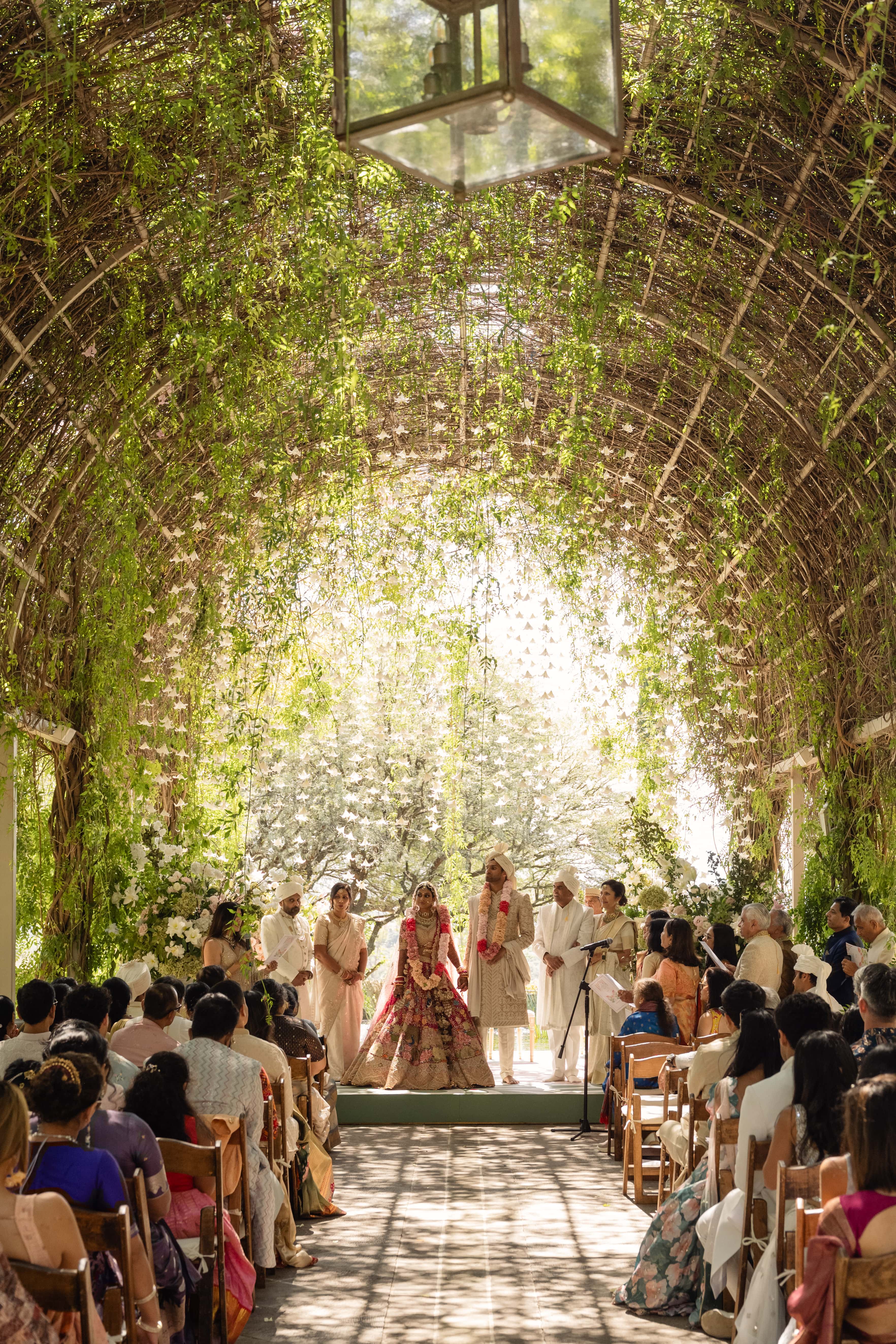
The ceremony takes place beneath the mandap, a sacred structure supported by four pillars representing the foundations of Hinduism: truth, compassion, spirituality, and virtue. Sheltered by these symbols, and accompanied by fire, earth, air, and light—the essential elements of Indian wedding rituals—the couple begins a path filled with symbolism, identity, and devotion.
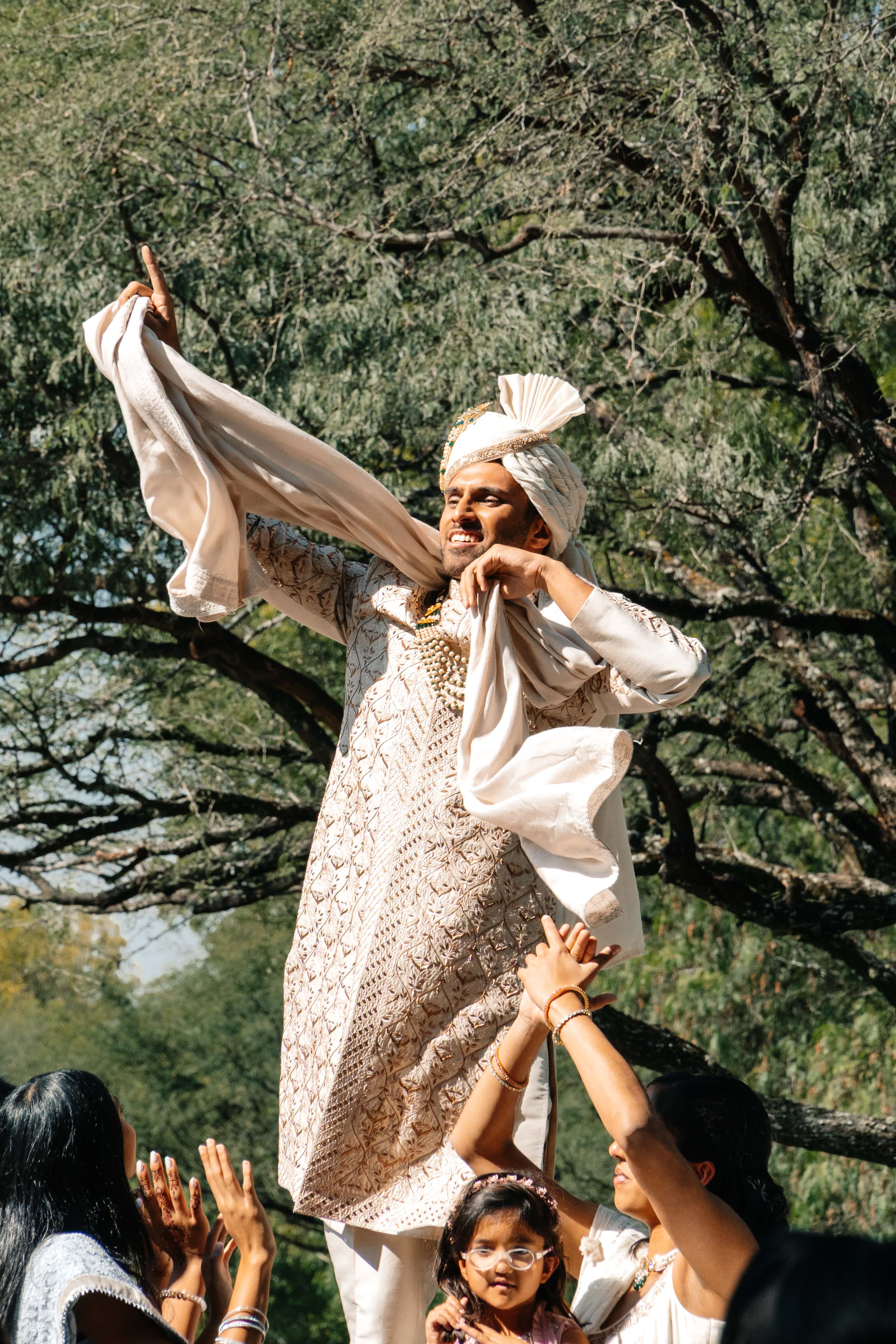
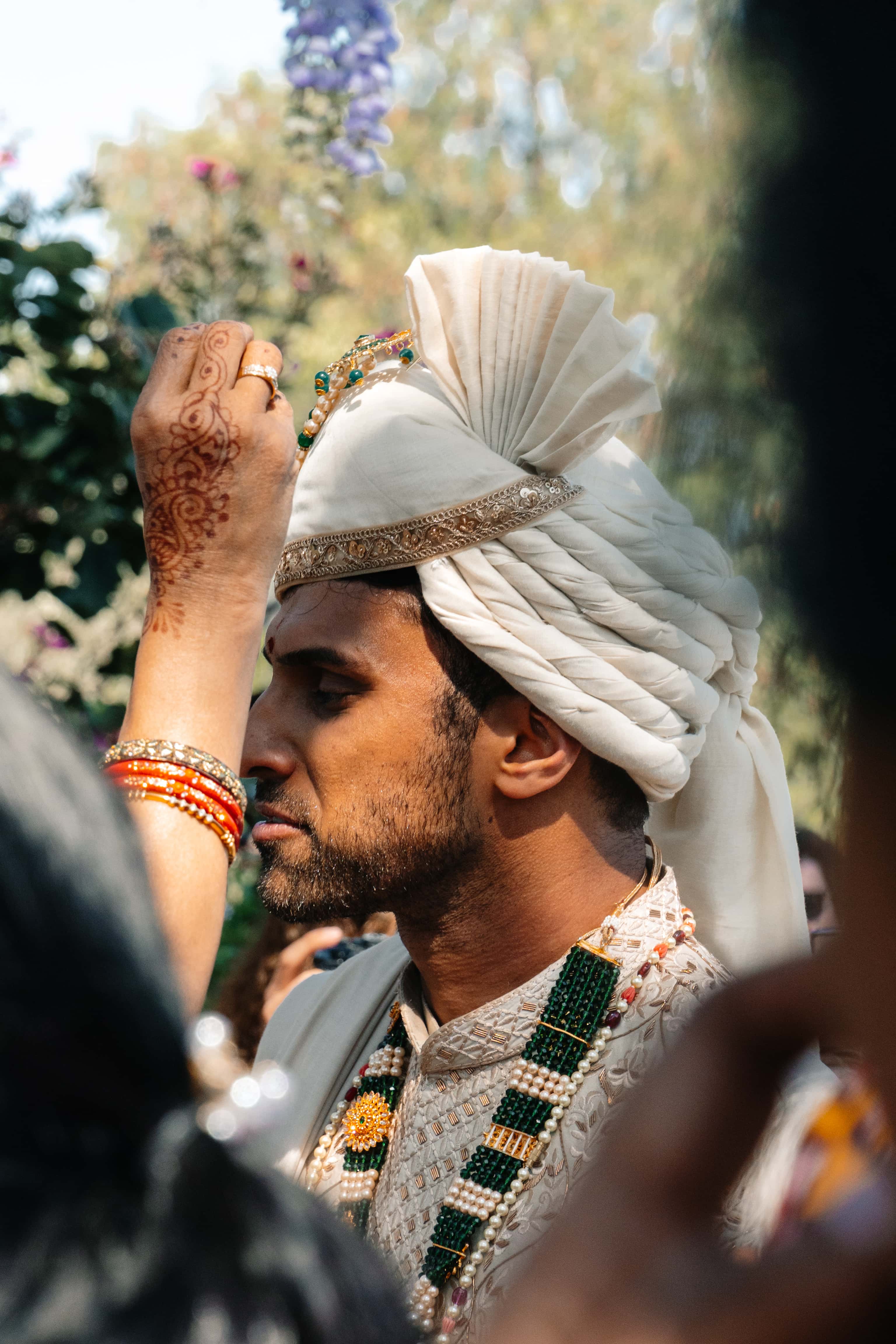
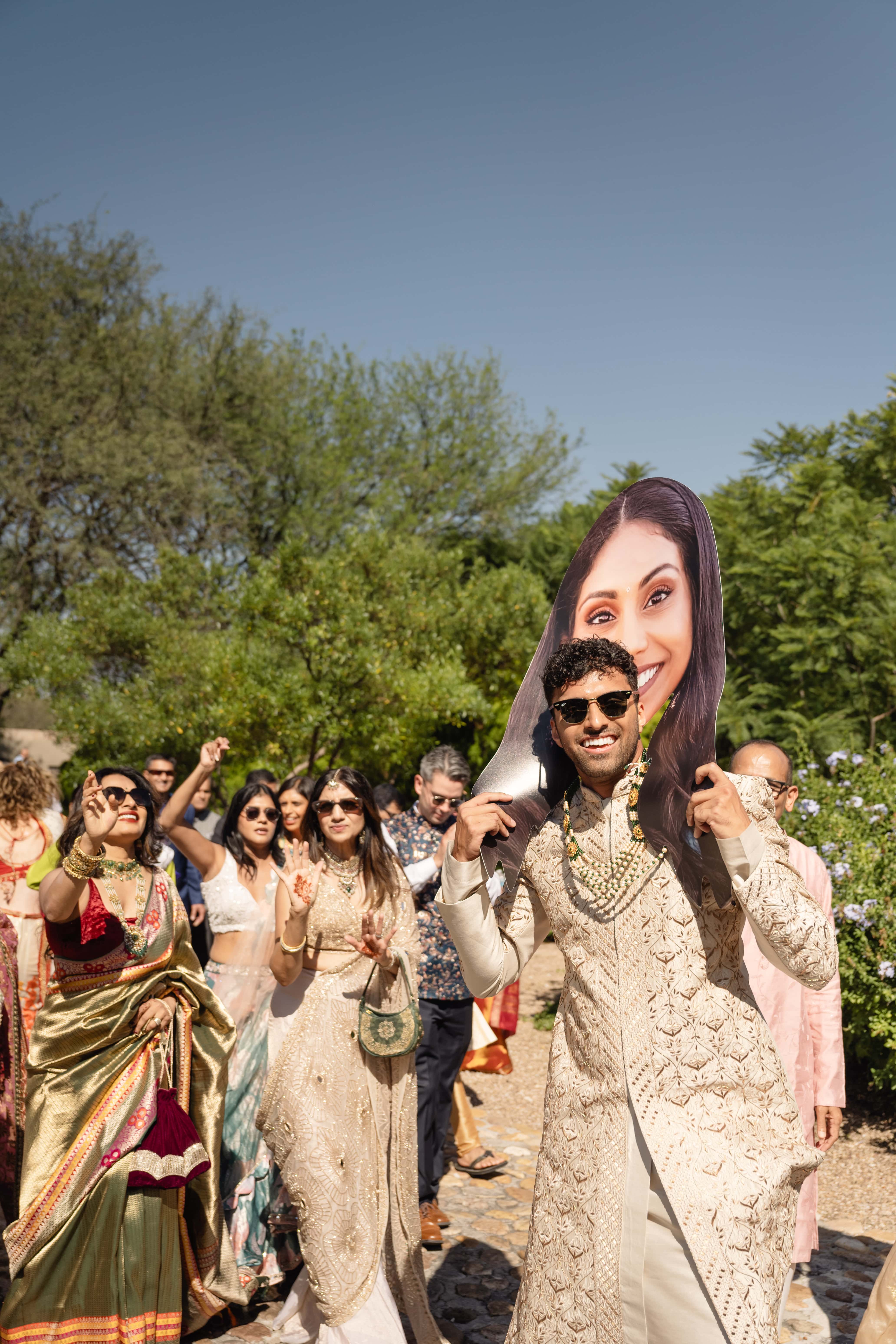
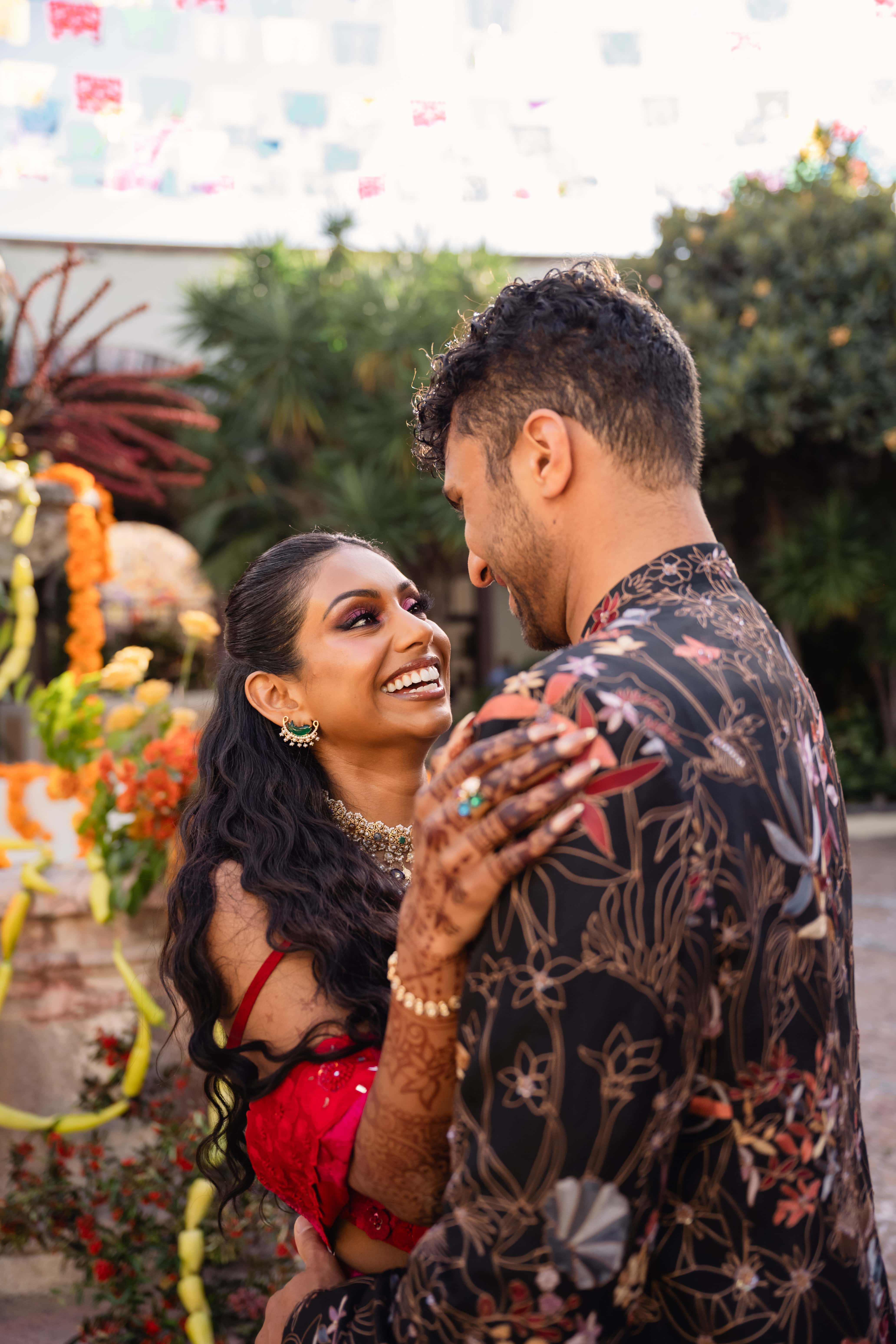
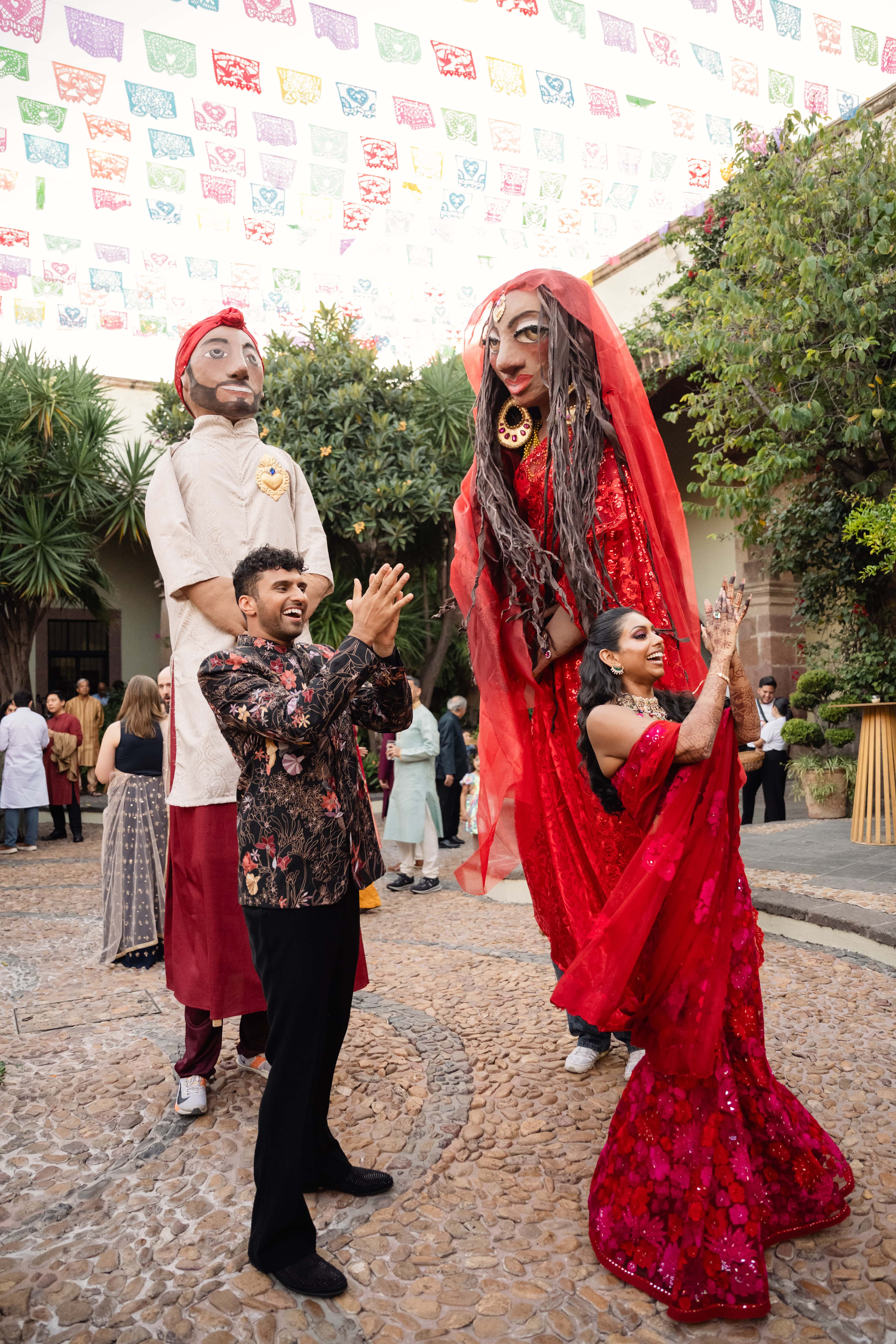
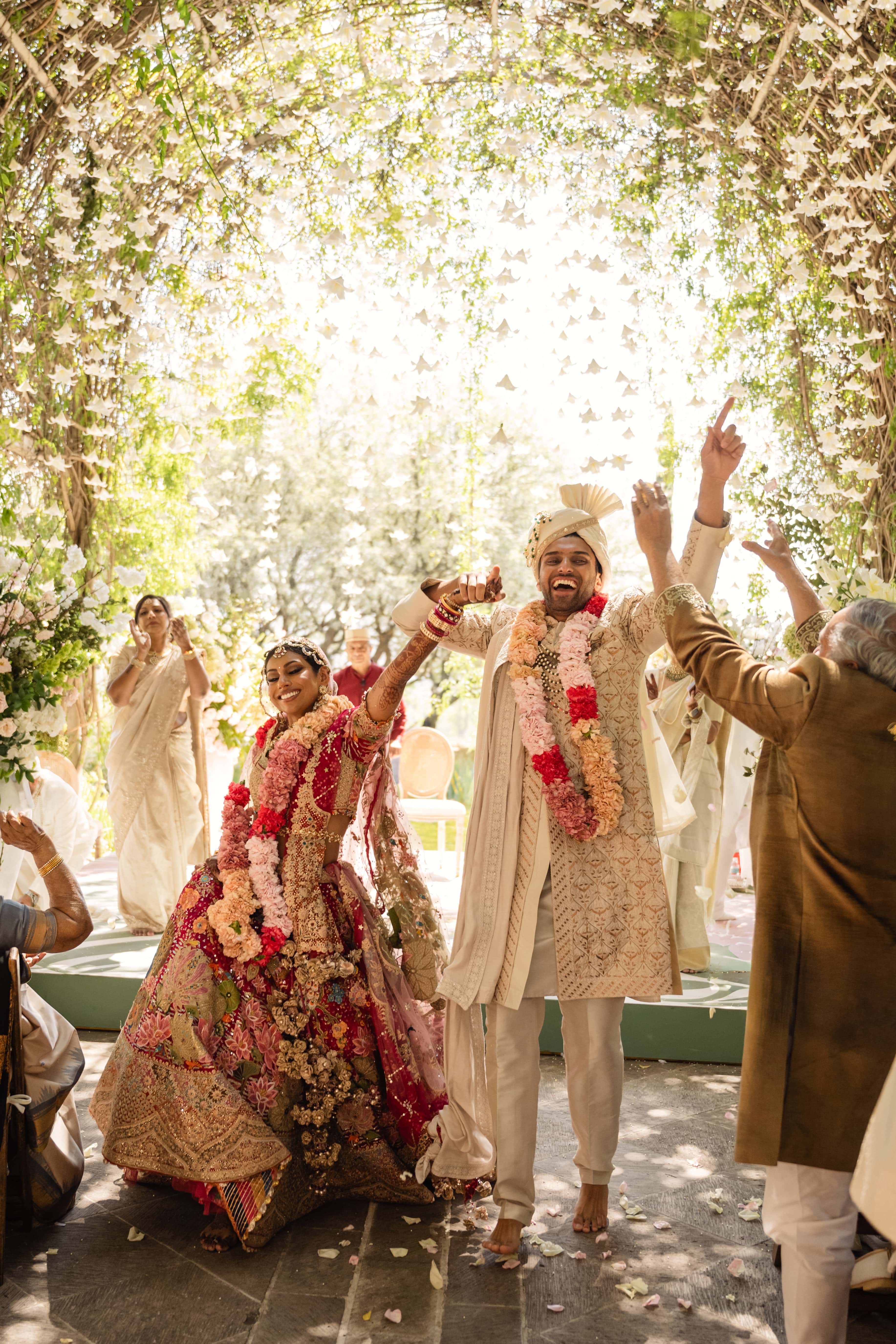
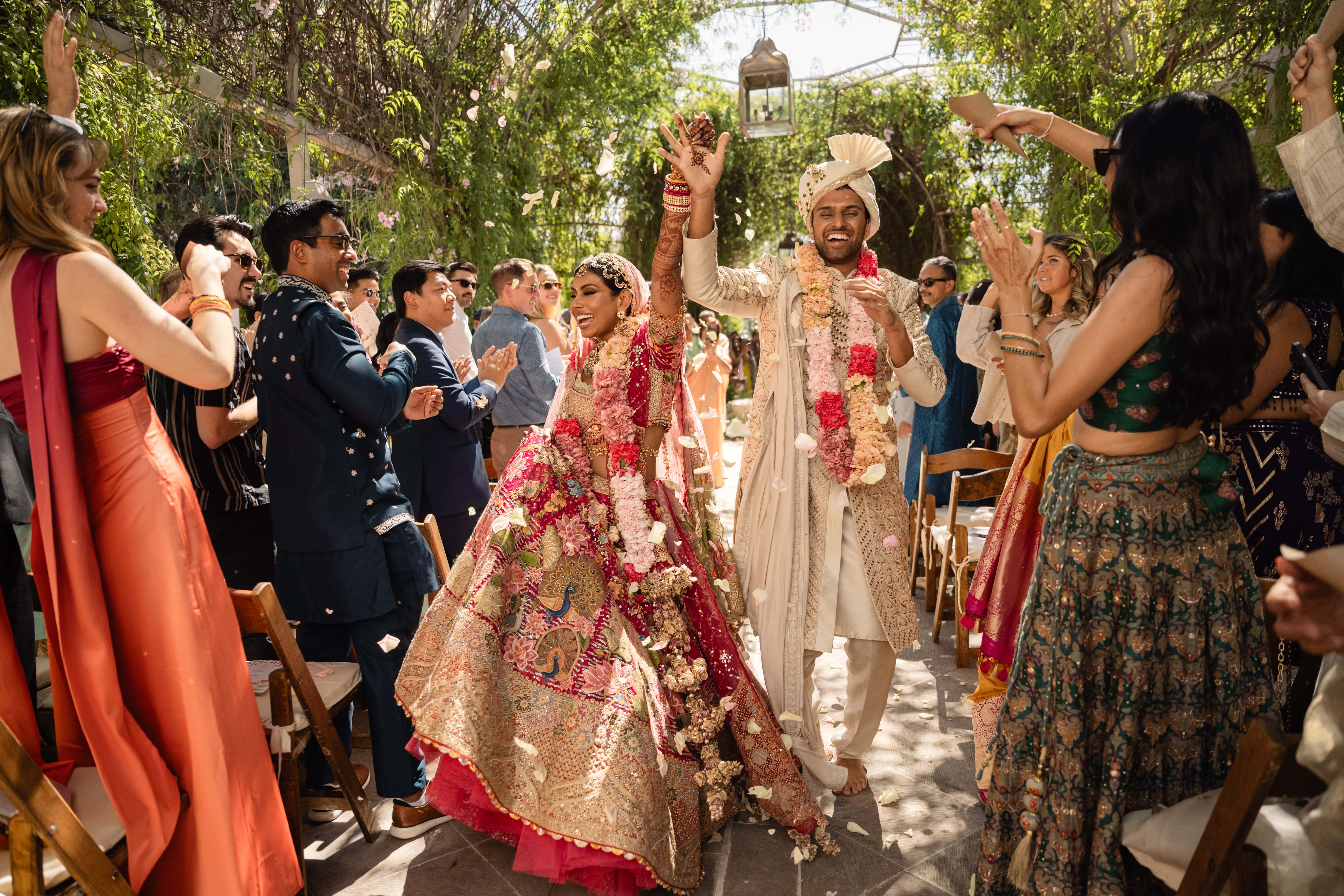
The groom’s procession, known as the Baraat, marks the start of the celebration. Amid music, dancing, and festive energy, family and friends accompany him to the mandap. Along the way, joy mixes with playfulness: when the groom removes his shoes to enter the sacred space, the bride’s family tries to steal them—an affectionate and humorous gesture that sets the tone for the bond between both families.
Moments from Neha & Sahil’s Baraat
This spirit of union continues in the Milni, the formal greeting where close relatives meet and acknowledge one another. With a symbolic embrace, a new—and extended—family is born. Before moving forward, the ceremony pauses for a moment of serenity: the Ganesh Pooja. As tradition dictates, the first prayer is dedicated to Lord Ganesha, who removes obstacles and protects the path ahead.
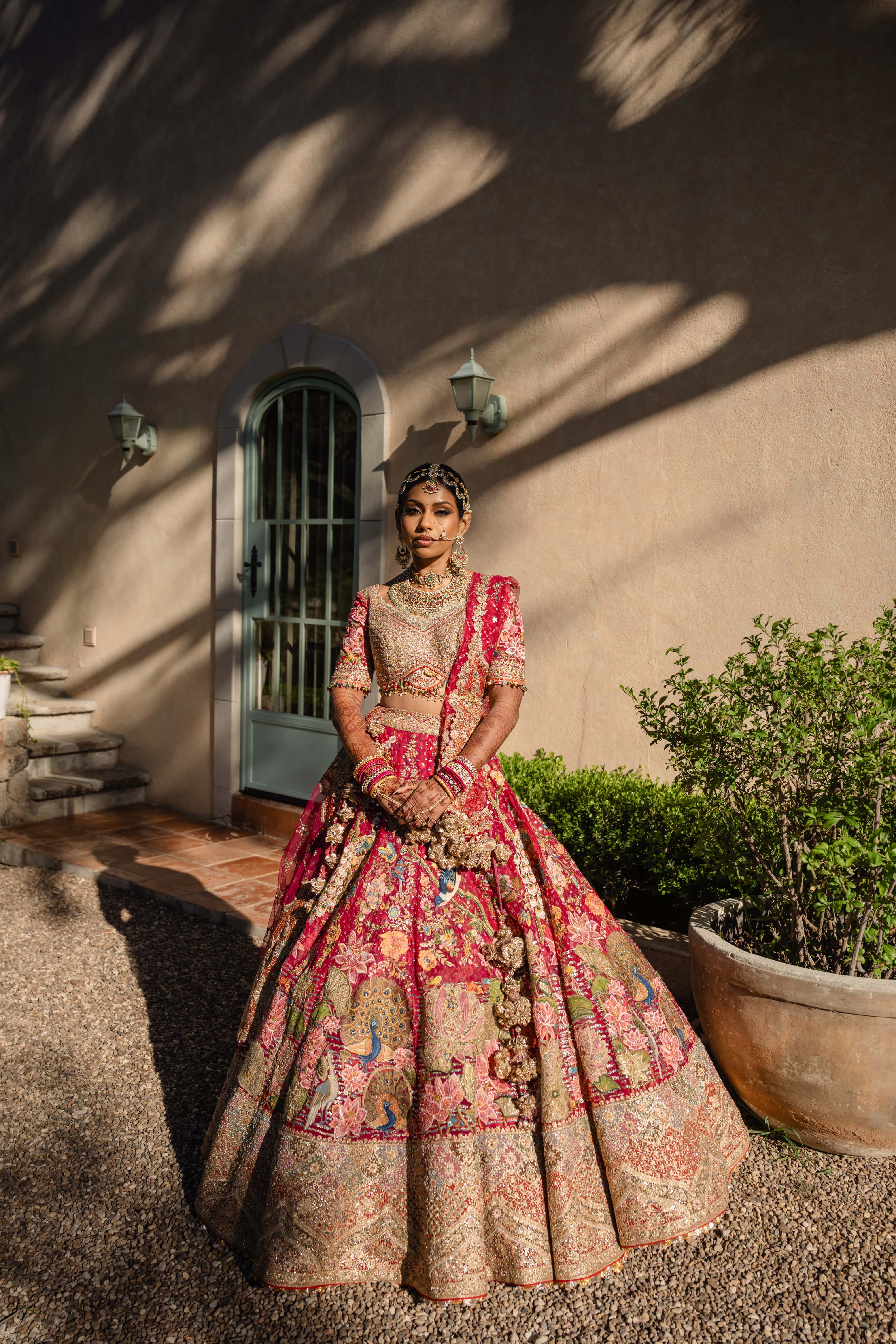
When the bride makes her entrance—the Kanya Aagamanam—the mandap transforms. Her arrival represents the presence of feminine grace, bringing balance and harmony.
Once under the four pillars, the couple exchanges garlands in the ritual known as Jai Mala. Through this gesture, they affirm their acceptance of the marriage while close family members recite the mangalashtakas, auspicious hymns that bless the beginning of their union.
The Kanyadaan is one of the most emotional moments: the bride’s parents place their hands upon the couple’s, offering their blessing and symbolizing trust, love, and the certainty that their daughter begins a new chapter supported and accompanied.
In the Talambralu ritual, traditional in Telugu weddings, the couple pours rice mixed with turmeric over each other’s heads, invoking the gods and their ancestors. What begins as a solemn gesture soon becomes a playful moment—a gentle competition that symbolically “decides” who will lead the relationship.
With that energy in the air, the ceremony moves to the Granthibandhanam, when the ends of their scarves are tied together, creating a visible bond that represents the union of their souls. It is a sacred knot that guides them to the next chapter: presenting themselves together before the fire, the most ancient witness in Indian weddings.
This leads to the Agni Poojan. Before Lord Agni—purifier and guardian of truth—the couple offers their vows. The fire illuminates the beginning of the Pradhanahomam, a ritual in which they walk four circles representing the essential values of married life: Dharma (morality), Artha (prosperity), Kama (emotions and pleasure), and Moksha (spiritual liberation). Each round marks a purpose; each step, a silent promise.
Then, as the fire continues to glow, the Shilarohanam takes place. The bride steps on a stone as a symbol of strength and resilience in the face of future challenges. In a delicate gesture, her feet are adorned with toe rings, marking her role as a companion and support in the journey they are about to begin.
The Saptapadi, perhaps the most iconic moment of a Hindu wedding ceremony, marks the formal beginning of married life. The couple takes seven steps together, each accompanied by a vow:
Once the seven steps are completed, the couple looks in the sky for Arundhati and Vasishtha, the twin stars of the Saptarishi constellation. Moving in perfect harmony, they represent the ideal of a couple who accompanies, respects, and grows together. Next, the Mangalsutra—the sacred necklace—is placed around the bride’s neck as a symbol of love, respect, and protection. The couple then exchanges rings, linking tradition and modernity in one gesture.
The final vows are spoken softly, an intimate declaration before the fire and before those witnessing the birth of a new family. Once the ceremony concludes, guests offer their blessings, sealing the beginning of a long and prosperous union.
Moments from Neha & Sahil’s Baraat, captured by Regina Malo
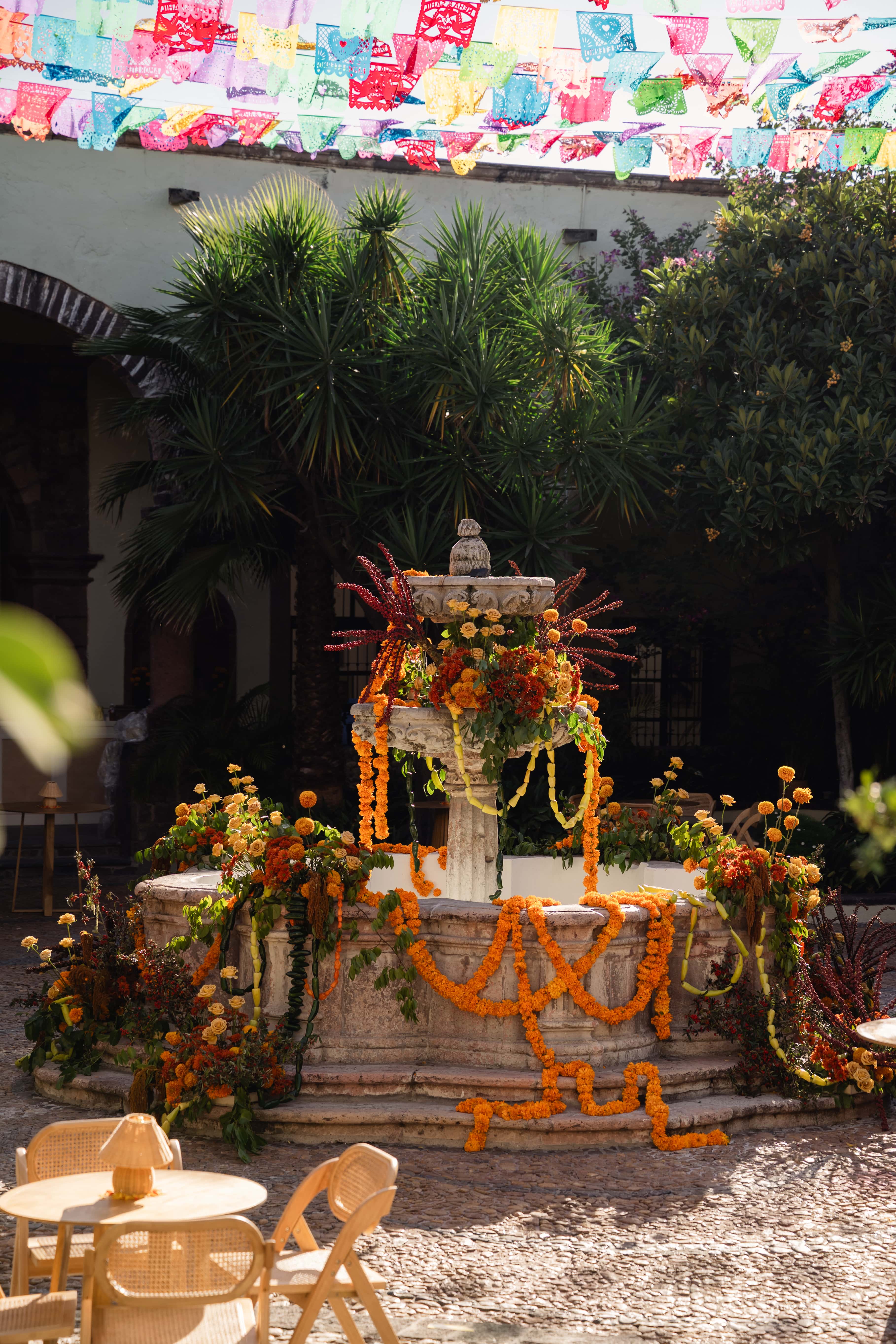
Hindu ceremonies are built on symbols passed down through generations. Every gesture, element, ritual, and moment marked by fire, earth, air, and light reflects a profound and complex understanding of what marriage represents: the union of two people, two families, and two worlds. In destination weddings, these rituals take on special importance, adapting to new landscapes and environments without losing their essence. This was true in the celebration of Neha & Sahil, where tradition found a natural home miles away from where it was born.
In Hindu destination weddings, creating a beautiful setting is not enough. To honor the meaning behind each step, one needs knowledge, precision, and a sensitivity that respects the cultural weight of every ritual. Hindu ceremonies—especially large-scale ones—require a strong structure and expert guidance capable of sustaining the magnitude of the event.
Lucero Álvarez Wedding Agency provides a clear and honest system so couples can feel at ease throughout the process and fully present during the celebration. This confidence, built through real experience and genuine dedication, allows them to enjoy the moment with the same depth and emotion with which they celebrate the beginning of their new life together.

We're here to turn your dreams into reality. Reach out to us for a personalized consultation and let's begin planning your unforgettable event.
The minimum wedding quote is $100,000 USD.